Water Damage - 5 min read
How Long Does Water Damage Drying Actually Take?
Published 2026-05-23
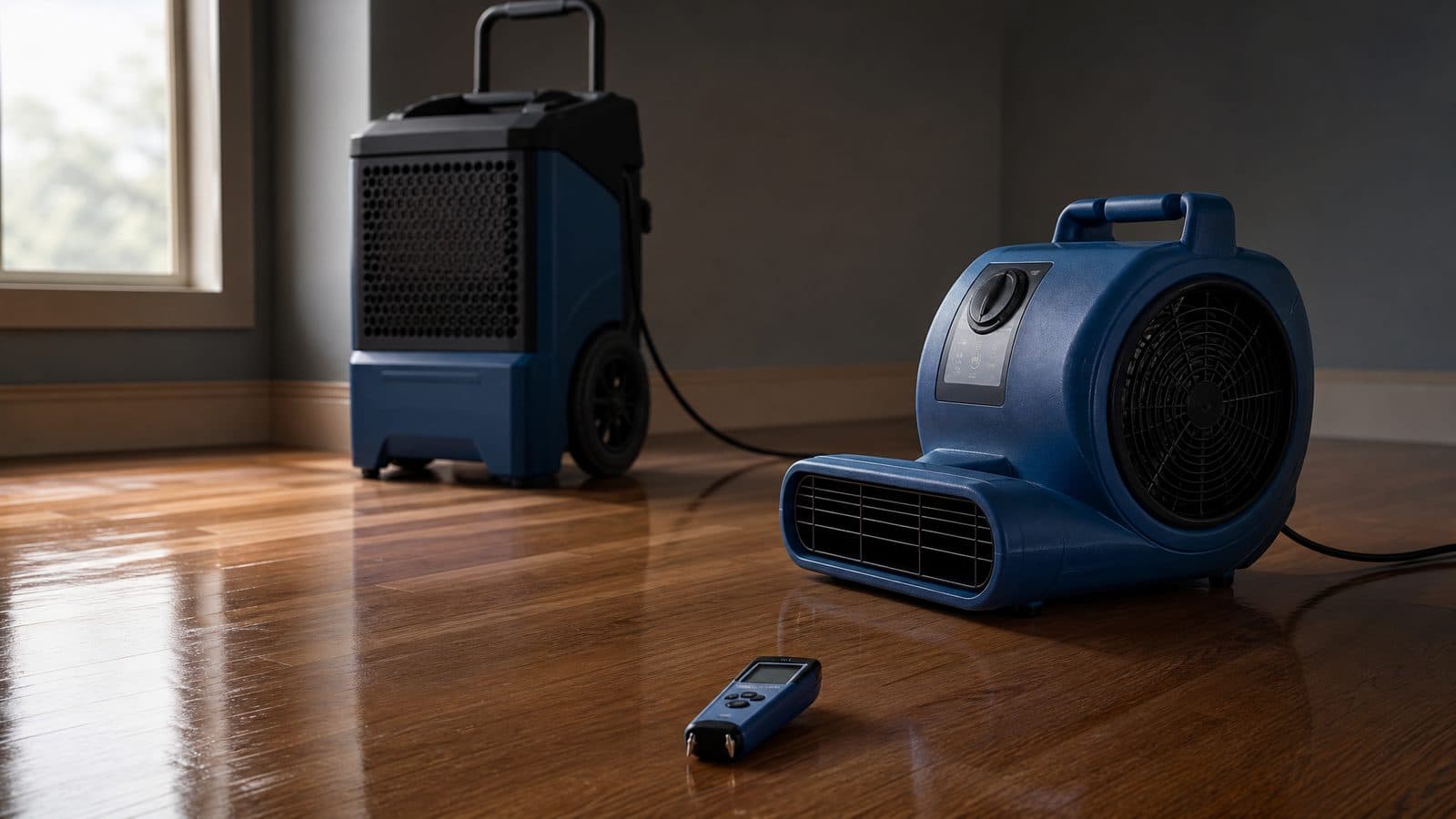
Most residential water damage drying projects in Florida run between 3 and 5 days. That estimate assumes the source is shut off, the affected materials are accessible, and the right equipment is placed quickly. Real timelines depend on what is wet, how saturated it is, and the environment around it.
What speeds drying up
- Catching the loss early. Material that has been wet for less than 24 hours typically dries faster and is more often salvageable.
- Removing wet, non-salvageable porous materials (carpet pad, soaked drywall, insulation) early so air movers can reach studs and subfloor directly.
- Using calibrated low-grain refrigerant or desiccant dehumidifiers sized for the volume of the affected space.
- Maintaining a stable interior temperature and relative humidity during the dry-out.
What slows drying down
- Hardwood floors, plaster, and double-layer drywall, which hold moisture deep in the assembly.
- Closed wall cavities and built-in cabinetry that trap moisture behind finished surfaces.
- Repeated water intrusion from a leak that has not yet been fully stopped.
- Outdoor humidity above 70 percent, which is common in Florida summers and affects unconditioned crawlspaces, attics, and garages.
When drying is considered complete
Drying is not finished when the floor feels dry to the touch. It is finished when affected materials reach the dry standard documented for the structure. A professional mitigation company logs moisture content of building materials (wood, drywall, concrete) and environmental conditions (temperature, humidity, dew point) every visit, then compares those readings against an unaffected dry reference inside the same property.
Related reads
Need help right now?
Rapid Restore dispatches 24/7 for water damage, mold, and fire emergencies in Florida.